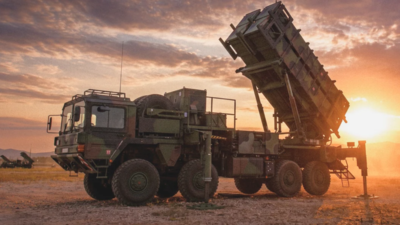
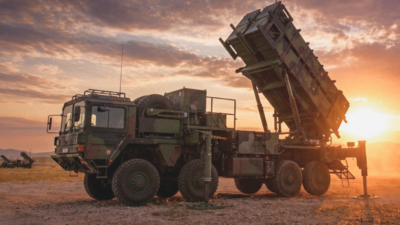
Due to the ongoing conflicts in Ukraine and West Asia, air defence stockpiles around the world are being depleted faster than factories can replenish them. Russia continues to fire ballistic missiles and drones at Ukrainian cities and energy infrastructure, while sustained operations in West Asia have drawn down stocks of similar weapons in other parts of the world.The interceptors at the centre of this problem were designed in an era when militaries expected short-duration but intense conflicts and did not anticipate firing such weapons in large numbers. These air defence missiles were expected to be used largely against combat aircraft and occasional surface-to-surface missiles.
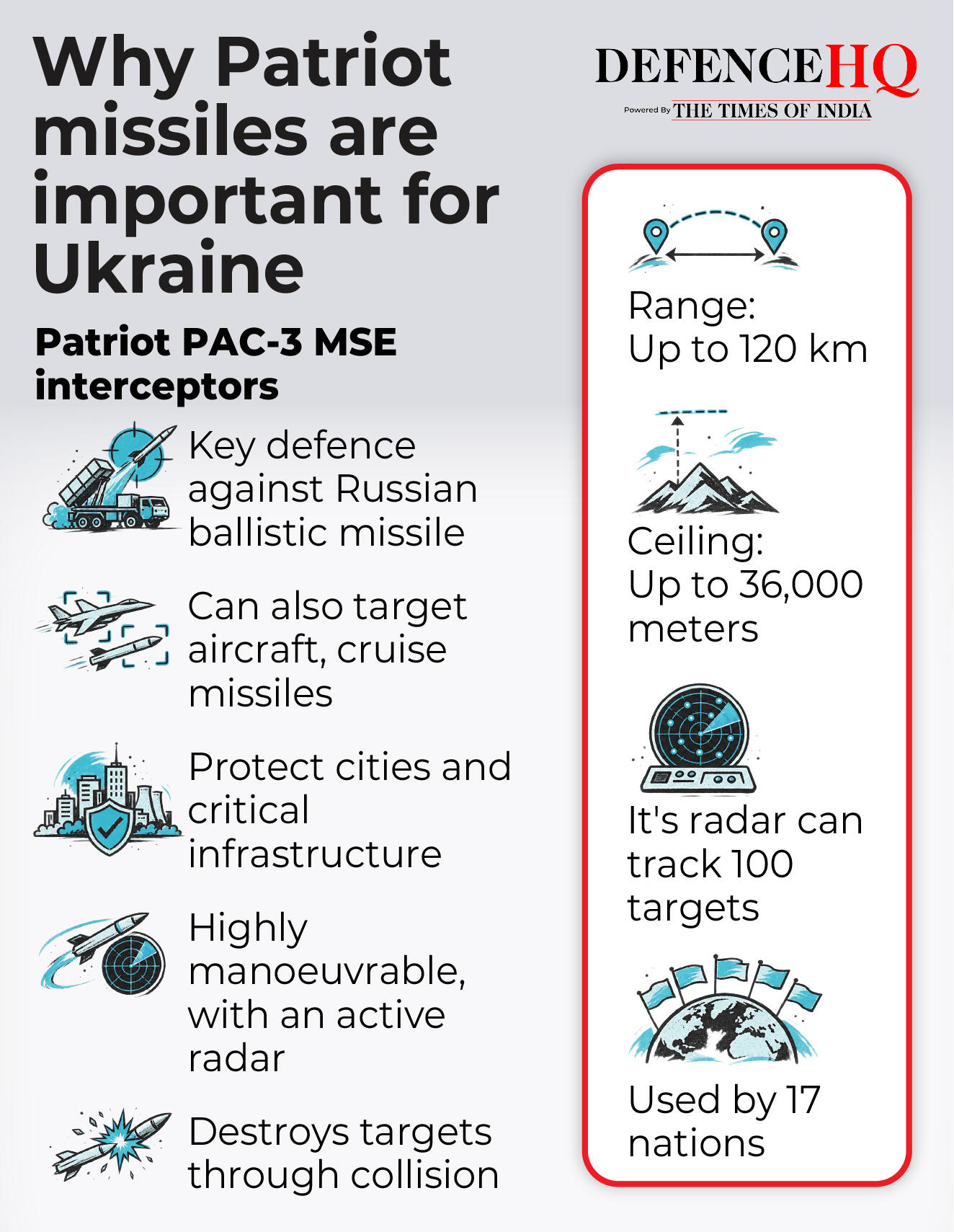
The Patriot missile is the central feature of the Ukrainian air defences against Russia.
The proliferation of drones and cruise missiles, along with the growing use of ballistic missiles, has changed air defence dynamics. Under these new conditions, Ukraine’s need for the Patriot system’s most advanced interceptor is now running up against the pace of American production of PAC-3 missiles, which are seeing a massive surge in demand.On October 30, the US State Department approved a possible sale of 500 PAC-3 MSE interceptors to Ukraine, valued at an estimated $2.1 billion. The US is not funding this procurement. Instead, the purchase is to be financed by Canada, Germany and Norway through the US JUMPSTART programme, alongside funding linked to the European Union’s Ukraine Support Loan, with Lockheed Martin as the primary contractor. The deal comes just before the onset of an extremely cold winter, with Russia targeting Ukrainian power infrastructure to put pressure on Kyiv.
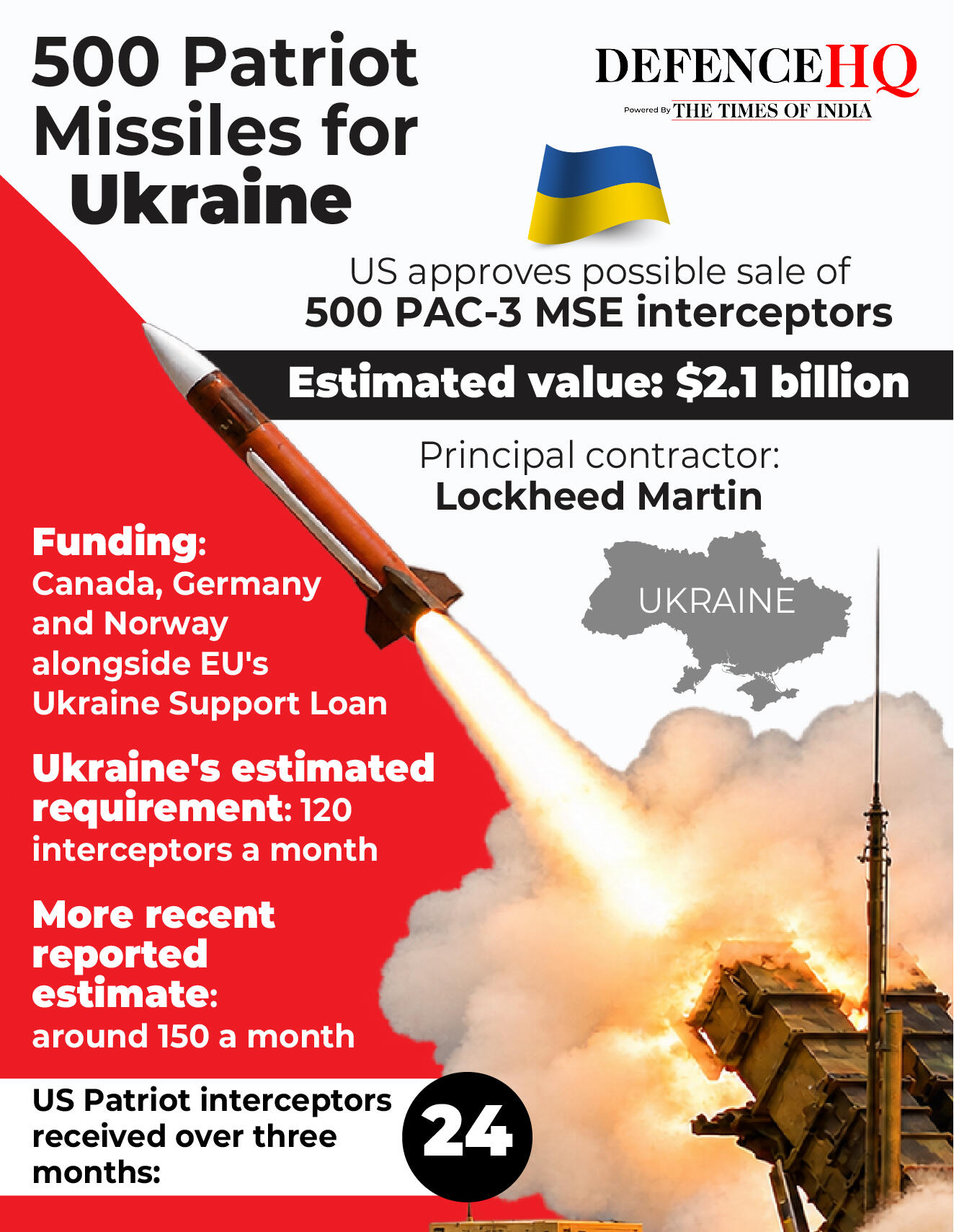
The Ukrainian armed forces have ordered 500 Patriot missiles from the United States.
An approval is not a delivery
The approval is an important step, but it does not mean 500 missiles are sitting in a warehouse. It is clearance for a possible sale, and the missiles still have to be built, tested and shipped. Ukrainian President Volodymyr Zelenskyy has warned that they may not arrive for several years, even though Kyiv needs interceptors for the coming winter. Reuters, citing two sources, reported that the newly approved missiles are not expected until the 2030s.A procurement decision cannot refill an air defence magazine emptied in combat, and that gap between paperwork and delivery is at the heart of the story.
The recently approved sale of 500 Patriot Advanced Capability-3 Missile Segment Enhancement interceptors to Ukraine by the Americans, is a typical example of what can befall a country that relies heavily on import of defence stores to fight its wars. The deal for the Patriot missiles will take years to roll out, while the threat to Ukraine is immediate. In fact, Zelensky has already approached the US for faster deliveries. The defence industry takes time to grow its roots and develop a domestic eco-system. In fact, Zelenskyy has often been forced to modulate his war plans in consonance with limitations imposed by his war fighting inventory, restrictions imposed by supplier nations and such like factors. These limitations have adversely affected the course of battles Ukrainians have fought. In today’s world, technological superiority, and the ability to manufacture cutting edge platforms are an integral component of military capability of a nation. The more self-reliant the State is, better is it for its sovereign decision making.
Brigadier SK Chatterji (Retd), author and strategic affairs expert
The factory floor
To understand the gap, it helps to look at what Lockheed Martin can actually build. The company delivered a record 620 PAC-3 MSE interceptors in 2025. In January 2026, the firm announced a seven-year framework agreement with the US government to raise annual production capacity from roughly 600 missiles to 2,000, more than a threefold increase.If output continues at the 2025 pace, an order of 500 missiles would equal about 81% of a full year’s output. If production eventually reaches 2,000 missiles a year, the same order would equal about three months of production.Neither figure is a delivery forecast, because Lockheed Martin also supplies the US military and several international customers, and a factory’s annual output is not the same as the number of missiles available for export.
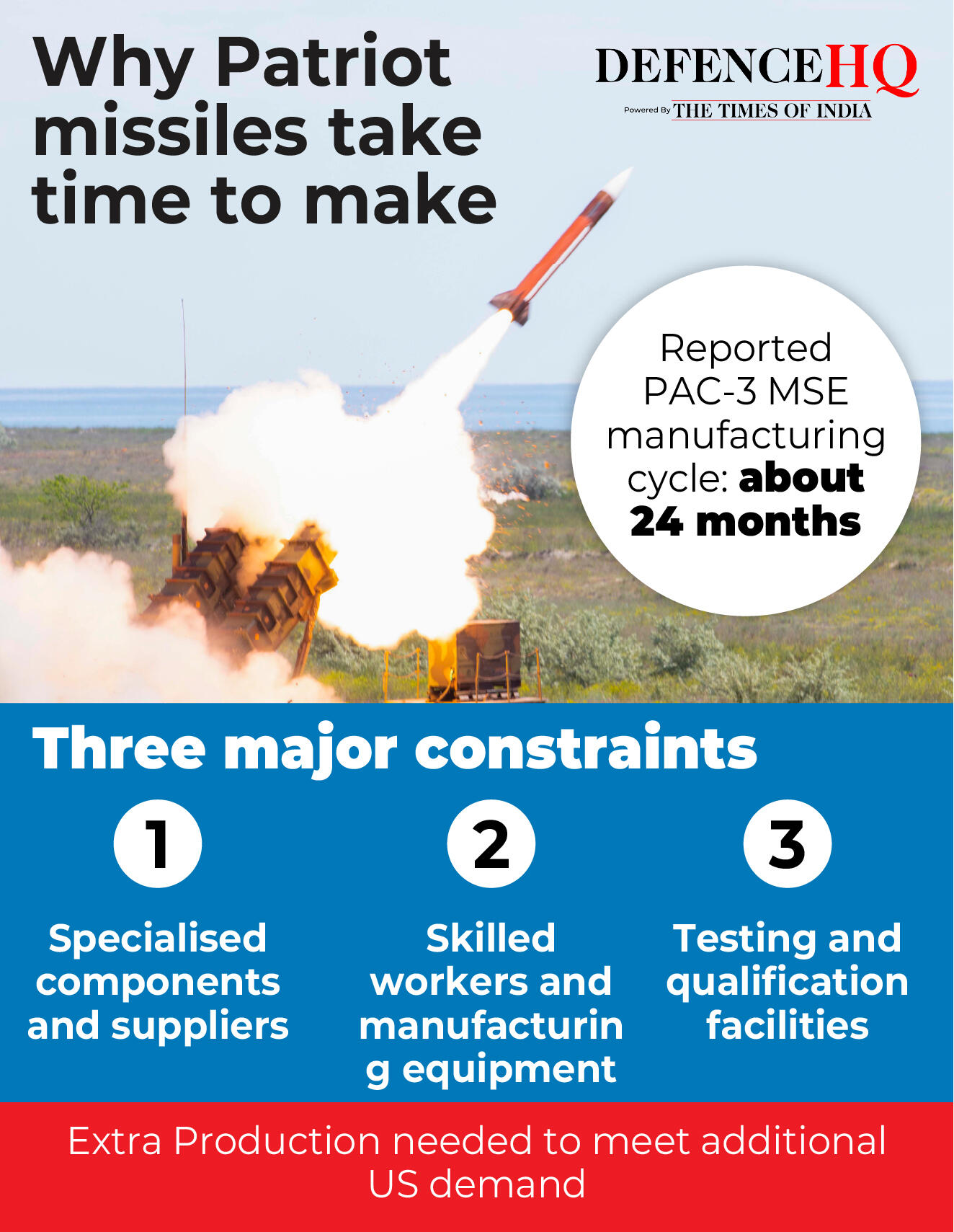
The air defence missiles needed by Ukraine will take years to be delivered.
Why 500 missiles can take years
There are three constraints at work here. The first is the manufacturing cycle. The New Voice of Ukraine reported that producing one missile can take as long as 24 months. That does not mean each missile sits on the production line for two years, since work on different missiles overlaps and components are made in parallel. It does mean an order for hundreds of advanced interceptors cannot be filled like an order for a standard commercial product.The second is competition for the same missiles. The US armed forces need PAC-3 interceptors, as do America’s European, West Asian and Indo-Pacific allies that operate Patriot systems. Any increase in production has to serve this wider demand, not just Ukraine.The third is the industrial base behind the final assembly line. Missiles depend on a network of suppliers, specialised components, skilled workers, testing facilities and manufacturing equipment. Lockheed Martin’s expansion agreement is designed to grow capacity across that network, but the investment takes time to translate into completed, tested missiles.In effect, the 500-missile sale is a long-term replenishment measure and does not answer how Ukraine will defend its cities before the new production arrives.
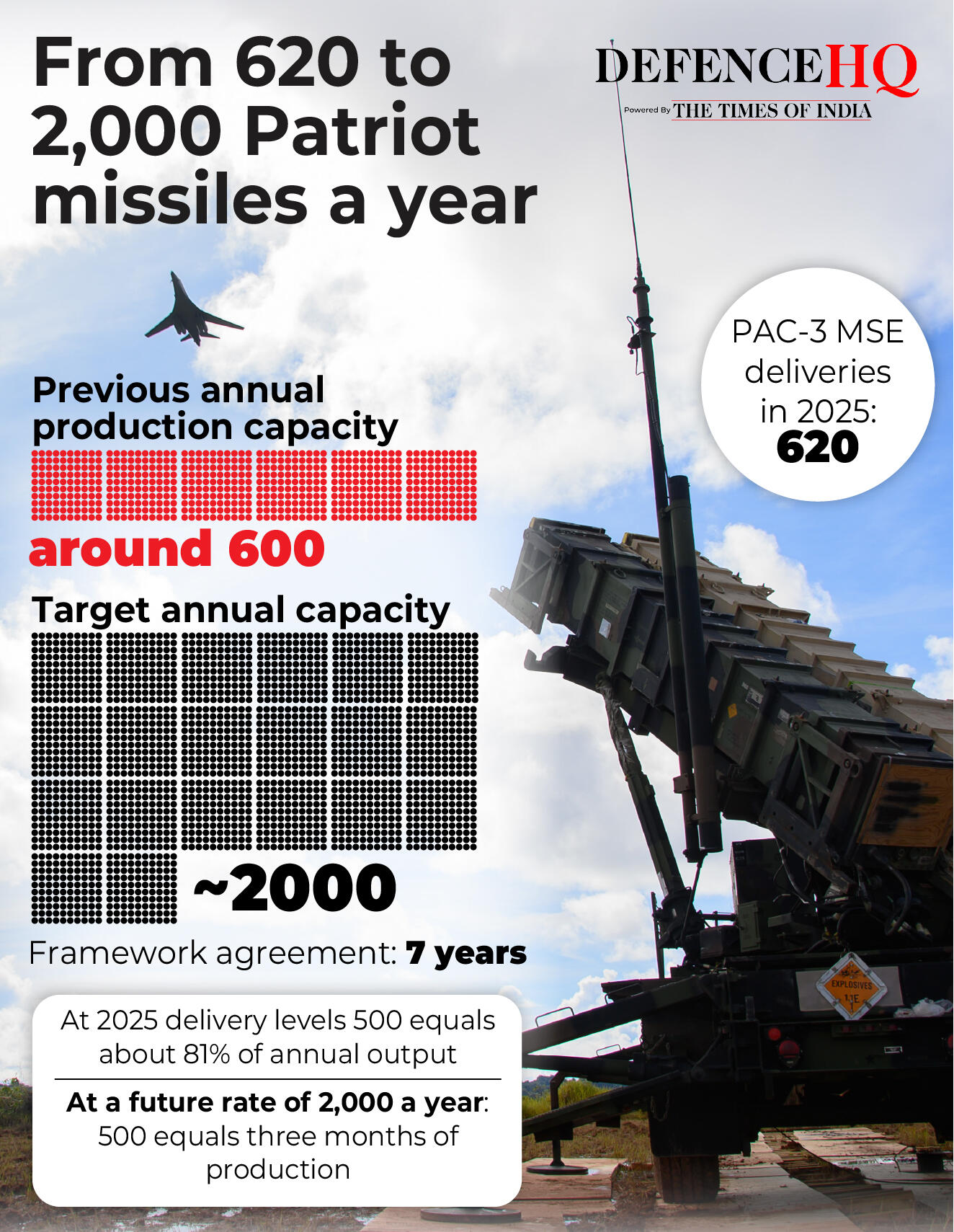
The repeated use of the Patriot missiles by Ukraine and other nations is fast depleting the size of the reserves .
How long would 500 missiles last?
The pressure on stocks becomes clearer when set against Ukraine’s own estimates of what it needs. In September, Defense Express reported Zelenskyy’s estimate that Ukraine would need 100 to 120 ballistic-missile interceptors every month during the coming winter. On October 24, Kyiv Post reported Zelenskyy as saying Ukraine had received just 24 Patriot interceptors from the United States over the previous three months.The arithmetic is sobering for decision-makers in Kyiv. At 100 interceptors a month, 500 missiles would last five months; at 120 a month, about four months.These are illustrative calculations, not forecasts, since they assume all 500 missiles are available on day one and that consumption remains constant. Actual usage would depend on the number and type of incoming missiles, the number of operational Patriot batteries and the availability of other air defence systems.Not every Russian missile needs a PAC-3 MSE, and using these scarce, expensive interceptors against threats that cheaper systems can handle would only deplete stocks faster.
PAC-3 Edge: The capability bet
Lockheed Martin’s answer is a new variant called the PAC-3 Edge, a more capable future interceptor for the Patriot family. This variant is intended to improve range, altitude and manoeuvrability over the current MSE version.The planned changes include a new seeker, an upgraded control system and a more advanced solid rocket motor developed with Northrop Grumman. It is aimed at more sophisticated threats, including advanced ballistic and hypersonic missiles.Lockheed Martin has said testing is expected to begin in 2027, with initial deployment targeted for 2031. These are programme targets, not proof that the missile is ready.The company plans to build Edge on its existing PAC-3 production line in Camden, Arkansas, with factory modernisation supporting the transition. It says production of the new missile could rise as MSE output tapers off, while retaining the ability to increase production when demand spikes.
Steelfin: The volume bet
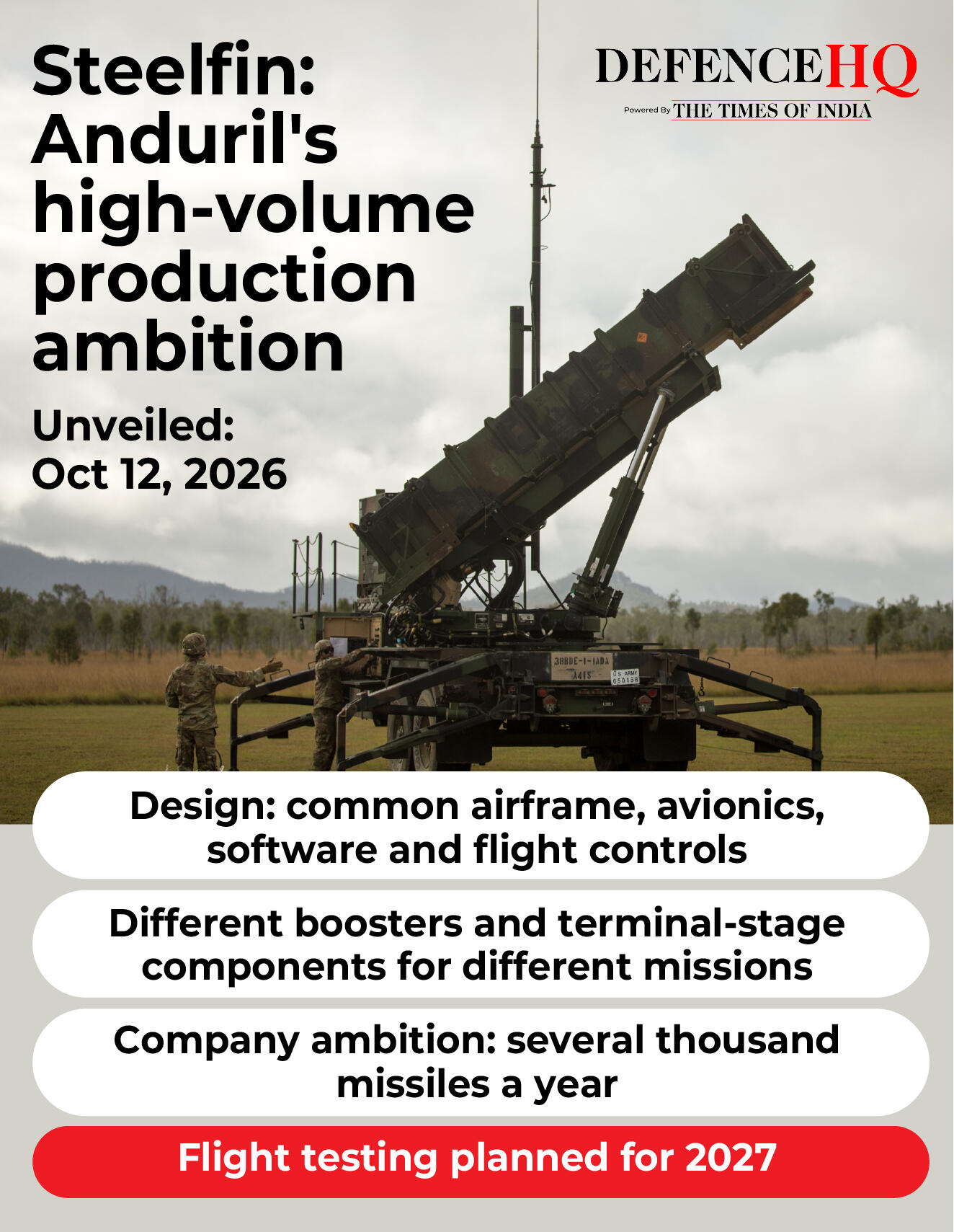
Missiles such as the Steelfin would tremendously improve the air defence lsituation for the US and its partners across the world.
Against this backdrop, the American defence industry is pursuing two different answers. The first came on October 12, when Anduril unveiled Steelfin, a family of modular surface-to-air missiles.The idea behind the missile is to build a common airframe, avionics, software, flight controls and interfaces, and then vary the booster and terminal-stage components to suit the threat.This family of missiles is meant to cover missions ranging from point defence against aerial threats to lower-tier air and missile defence and some ballistic missile defence roles, with compatibility planned for existing launchers such as the Mk 41 Vertical Launch System (VLS) deployed across US Navy ships and selected Patriot-related equipment.The most consequential claim is about scale. Anduril says it is planning near-term production of several thousand missiles a year, with capacity that can shift towards whichever variant is in demand.The US-based firm has not disclosed a detailed production schedule or contract quantities, and flight testing of Steelfin variants is planned for 2027. The cost comparisons the company has made against more expensive interceptors are likewise company claims, not independently demonstrated results.The logic of modularity is simple: If one design can be adapted for different missions, the manufacturer needs fewer separate production processes and can move between variants without building a new production line.But commonality does not remove every bottleneck. Different seekers, rocket motors and terminal stages still need to be qualified and tested.
The bigger lesson
Air defence forces need enough missiles to sustain operations and interceptors capable enough to defeat the hardest threats.A cheaper, high-volume interceptor could help preserve the most advanced weapons for targets that require them, while an improved top-end missile would widen the range of threats that can be engaged.The PAC-3 MSE is the only one of the three that is operational today. Steelfin and Edge are both in development, and neither will help Ukraine this winter.That is the larger point: The Patriot shortage is as much a question of industrial speed as it is of money or political will.The capacity expansion from roughly 600 to 2,000 missiles a year is significant, but it will take years to build, while missiles are being used up now.For Ukraine, the near-term question is whether its partners can release interceptors from existing stocks while an expanded production base catches up.The number that matters most is not what a company says it can eventually build, but how many working interceptors it can deliver each month, how fast that rate can rise, and how much of that output reaches the places where it is urgently needed.