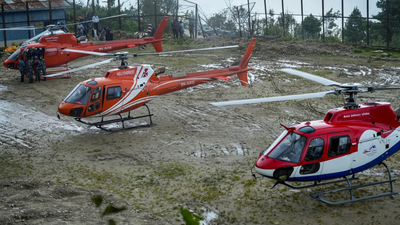
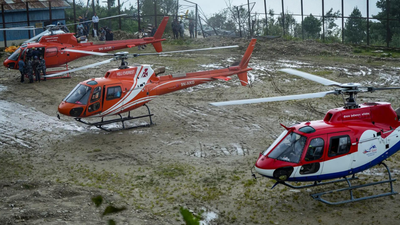
Trishuli Bazaar: With roads and bridges severed across Rasuwa and Nuwakot after the Aug 26 Bhote Koshi-Trishuli flood, helicopters became the main rescue lifeline, airlifting more than 4,000 people in hundreds of sorties through a narrow gorge in what officials described as possibly Nepal’s biggest such operation.Pilots said the missions were tougher than Everest-season flying, with wrong coordinates, landing spots buried under mud, crowded skies, drones and false rescue alerts complicating operations.Talking to TOI at Maithili Barracks, where choppers were taking off and landing in Trishuli Bazaar, Captain Bimal Sharma of Simrik Air said Everest flights, despite the altitude, were more predictable. “Even during the climbing season on Everest, it’s still busy, but there’s a clear goal of where to go and what to do.” Here, he said, coordinates often did not match and pilots sometimes reached places where the landing ground itself had vanished. “We have to search around. In some places where we were asked to land, there was no place to do that.”
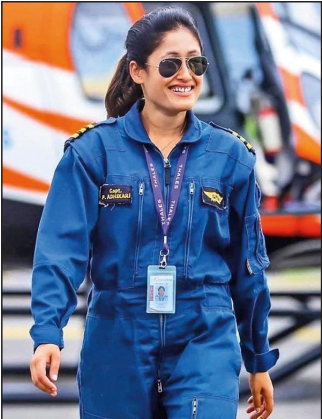
Nepal’s first female helicopter Captain Priya Adhikari, flew around 100 rescue missions. She described navigating a narrow valley with up to 20 helicopters at once while evacuating survivors
At times, over a dozen helicopters operated simultaneously between Trishuli and the Tibet border. There was no separate airport in the flood-hit area, leaving pilots to work in effectively uncontrolled airspace once inside the gorge. Pilots devised their own rules – keeping left in valleys, announcing positions and maintaining altitude gaps.Captain Maniraj Lama of Kailash Helicopter said the missions changed by the day. Initially, choppers carried doctors and rescuers in and survivors out. They then shifted to food and relief drops; later, as bodies began decomposing at inaccessible sites, crews started lifting some by longline beneath the helicopter.Drones added another hazard. Civil aviation authority of Nepal joint spokesperson Gyanendra Bhul said pilots relied on visual separation and direct communication. “Right now, the biggest challenge for helicopters there is from those drones,” he said.False alerts became a recurring drain on flying time. Old and unverified videos kept circulating for days, repeatedly sending helicopters and drones towards places where nobody was found. After one claim that people were stranded in forests around Ghattekhola, national emergency operations centre chief Phanindra Prasad Poudel said, “We even had a helicopter hold the area for 19 minutes. We also monitored it with drones. But nothing was found there.”