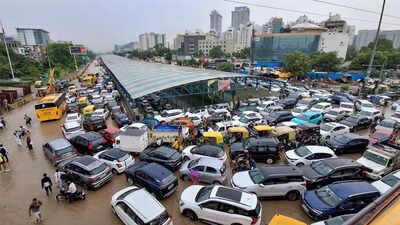
GURGAON: Gurgaon’s Monday monsoon disruption exposes a recurring infrastructure failure, with 75mm of rain flooding major roads, stranding schoolchildren and commuters, and causing missed trains. Hundreds of crores spent on drainage and desilting, along with pending road repairs and major civic body vacancies, show a city repeatedly treating symptoms, not building long-term resilience.
When a spell of rain becomes a stress test for a city
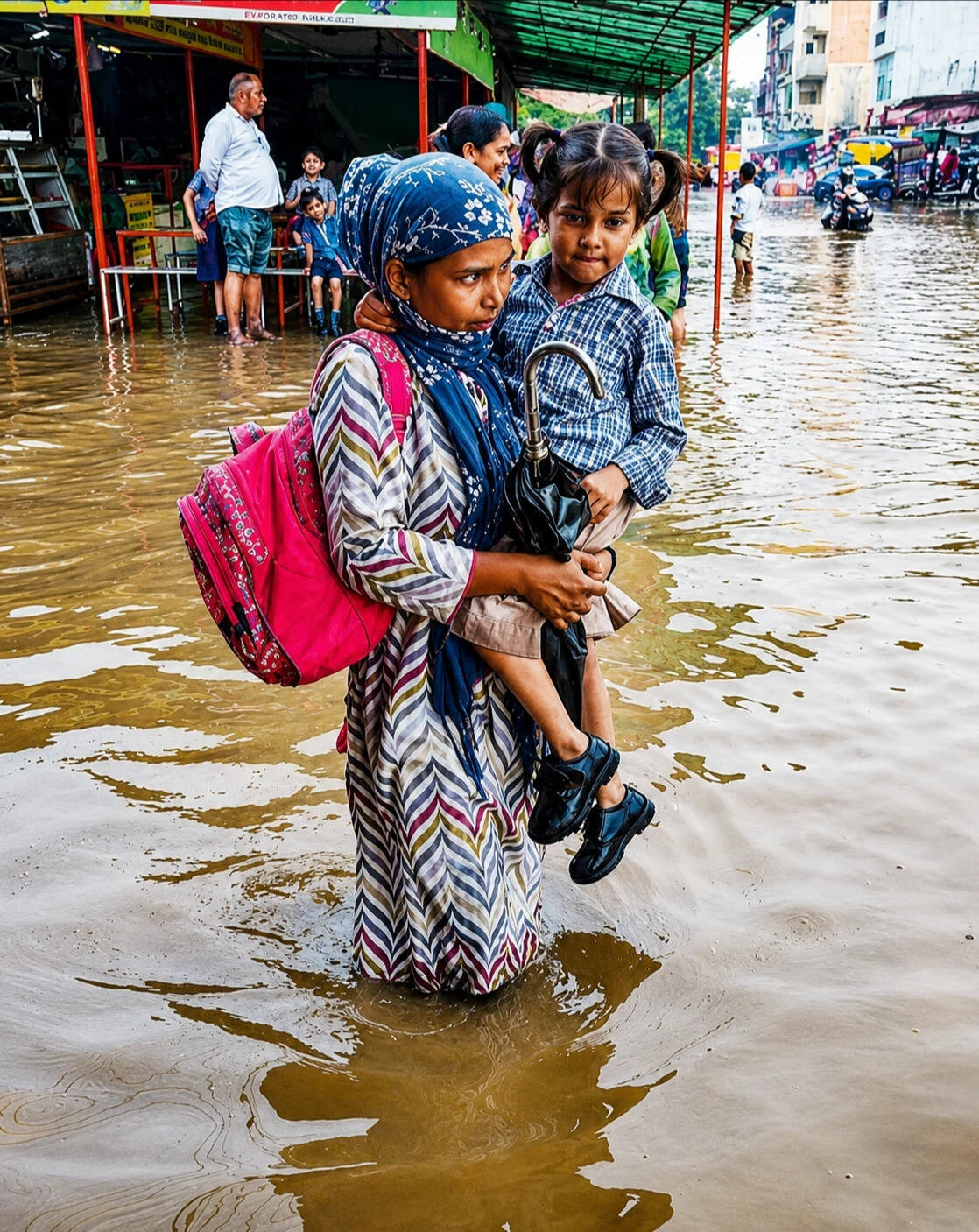
Parents were seen wading to the buses to get their children out and carry them back on their laps
Gurgaon recorded about 75mm of rain between 8am and 5pm on Monday, but the impact was far greater than the rain figure suggests. Major corridors like Sohna Road, Golf Course Road, MG Road, Delhi-Gurgaon Expressway, Rajiv Chowk, Hero Honda Chowk, IFFCO Chowk and Udyog Vihar were waterlogged, and traffic came to a standstill.The most troubling evidence wasn’t in traffic statistics, but in school buses. Buses crawled down flooded streets, and children were stuck for three to six hours, with some parents wading through nearly 3.5 feet of water to reach them.
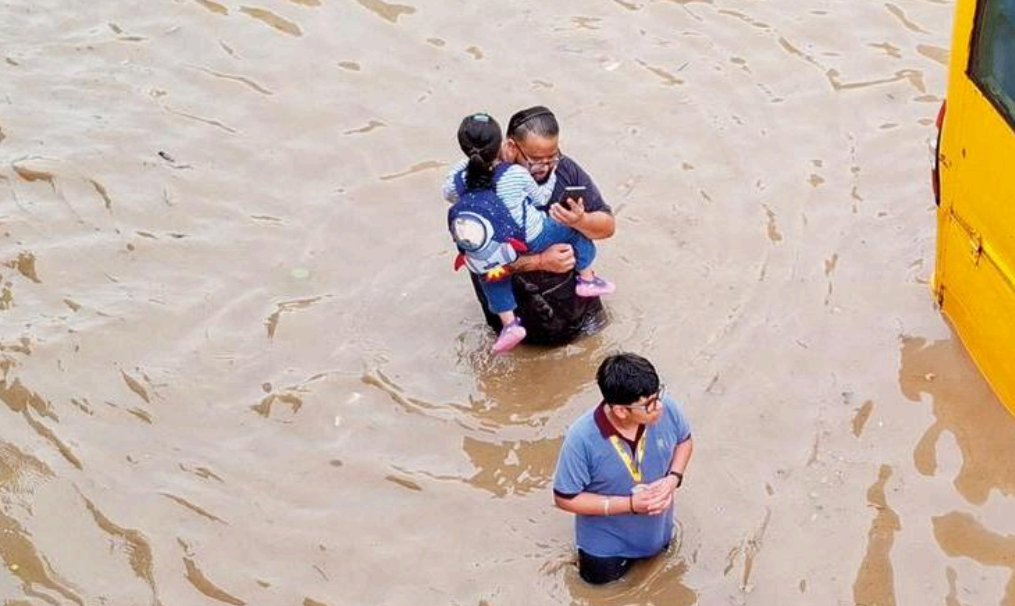
Parents were seen carrying their children amid the flood like situation
A Class II student, who left the Sector 47 school at 12.30 pm, could reach home in Sector 51 only at 8.30 pm. Tax-paying parents had one simple question: why is rain an emergency?The economic toll is just as real, but it’s rarely found in a city budget. A commuter who left Sector 48 at 1.10 pm to catch a 4.10 pm train from New Delhi Railway Station had intentionally kept a margin of three hours.But after almost two hours, the cab had covered only 500 meters on Sohna Road. He had to give up on the road journey and, eventually, the train itself.This is infrastructure failure as residents see it: lost hours of work, missed trains, expense and disruption to business, and delays that are not their fault.
The money is spent. So why does the problem come back?
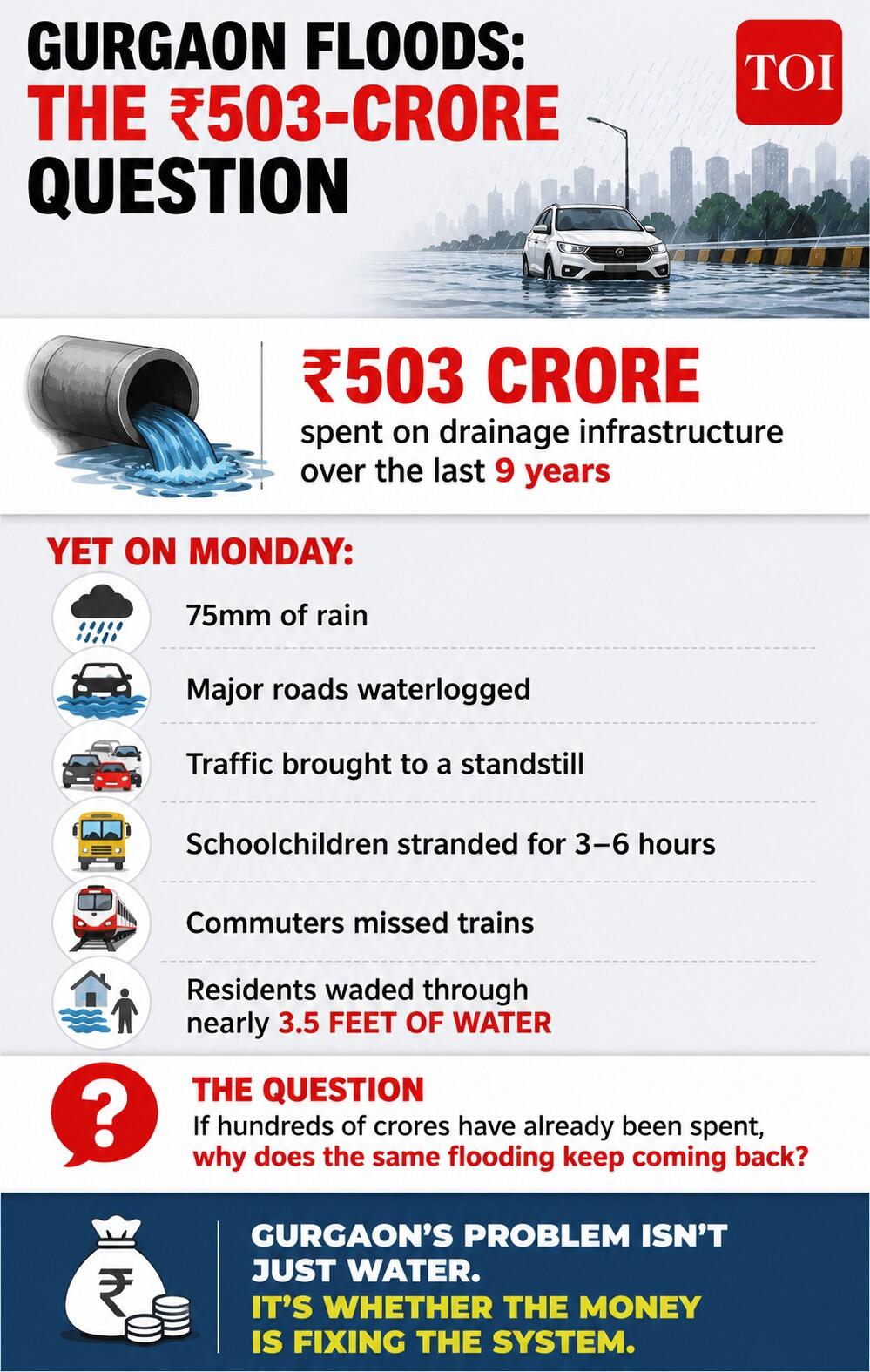
Rs 503 cr spent on drainage infrastructure
This is perhaps the most uncomfortable question for Gurgaon. A recent assessment noted that the administration has spent close to Rs 503 crore over the last nine years, up to 2025, on improving the city’s drainage infrastructure.But an hour of heavy rain was enough to bring large parts of the Millennium City to a standstill again. So it’s no longer just a question of money being spent — it’s a question of whether public spending is addressing the underlying engineering problem, or merely funding another round of emergency pumping, desilting, patching and road repairs.
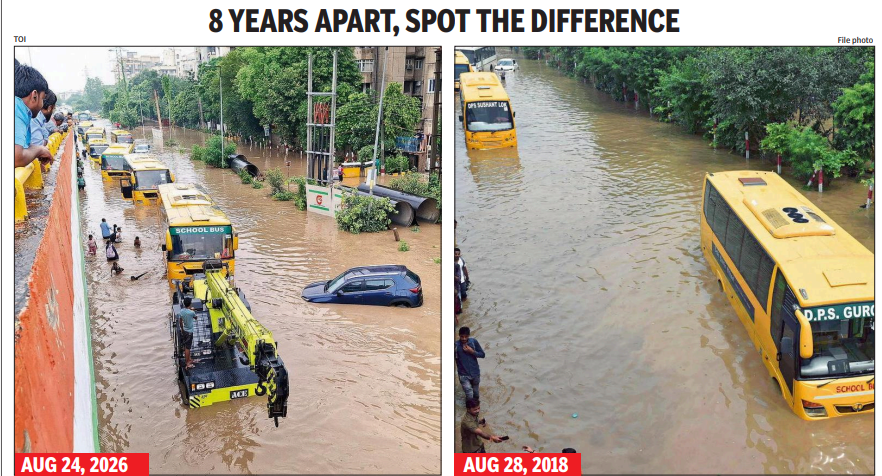
Spot the difference
There were warning signs before the week began. The city’s three major master drains have been desilted, the civic body said. Work was completed at 158 vulnerable waterlogging locations in June.But another big rainstorm brought flooding back to several of the same major corridors. Notably, a road in Sector 102-102A that was redeveloped by the civic body last year at a cost of Rs 11.8 crore, complete with a drainage system, continued to be plagued by recurring waterlogging.
Gurgaon keeps treating the symptom, not the system
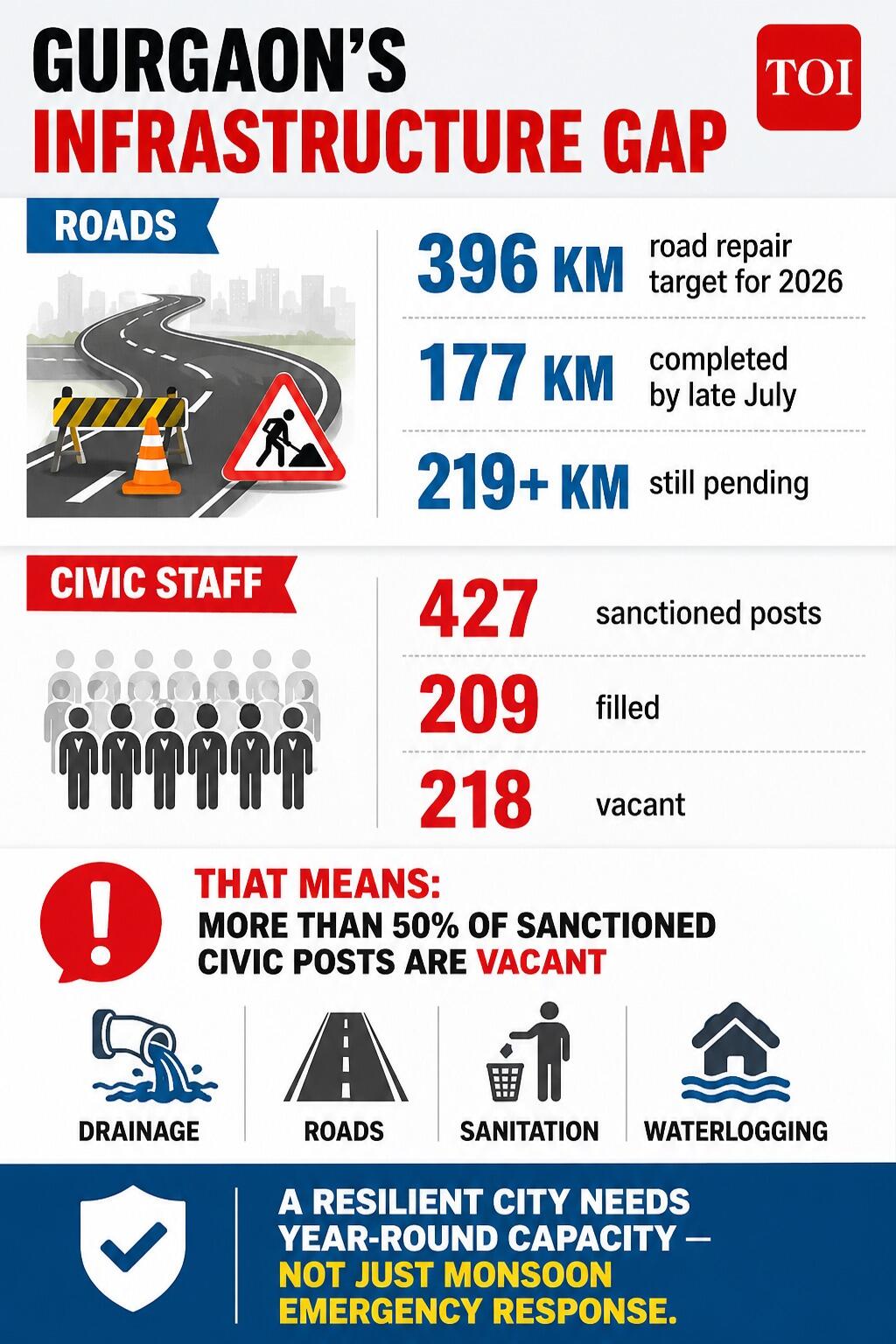
Gurgaon’s infrastructure gap
The city’s yearly cycle has become depressingly predictable. The monsoon comes, and the roads turn into potholes and craters. Drains get clogged, traffic snarls up, civic agencies pitch in with pumps and manpower, stopgap repairs are carried out, and residents are told the problem is being looked into.As of late July, the MCG had reached 177km of a 396km target for 2026, with more than 219km of road repairs still to be done. It’s not just about bad weather; it’s about whether the city is building infrastructure for the Gurgaon of today.
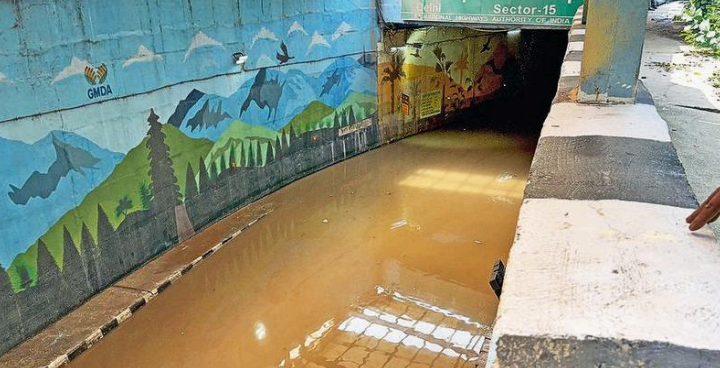
Medanta underpass shut again, fourth time this season
Another problem is the capacity of the civic machinery. As of July 29, only 209 of the civic body’ 427 sanctioned posts were filled, leaving 218 vacancies — more than half the sanctioned workforce.This shortage is particularly acute because drainage, roads, sanitation and waterlogging need monitoring all year round, not just emergency action during a storm. No city can be resilient if it waits for water to flood its roads and homes before deploying more pumps.
You can’t keep asking residents to make room for your city
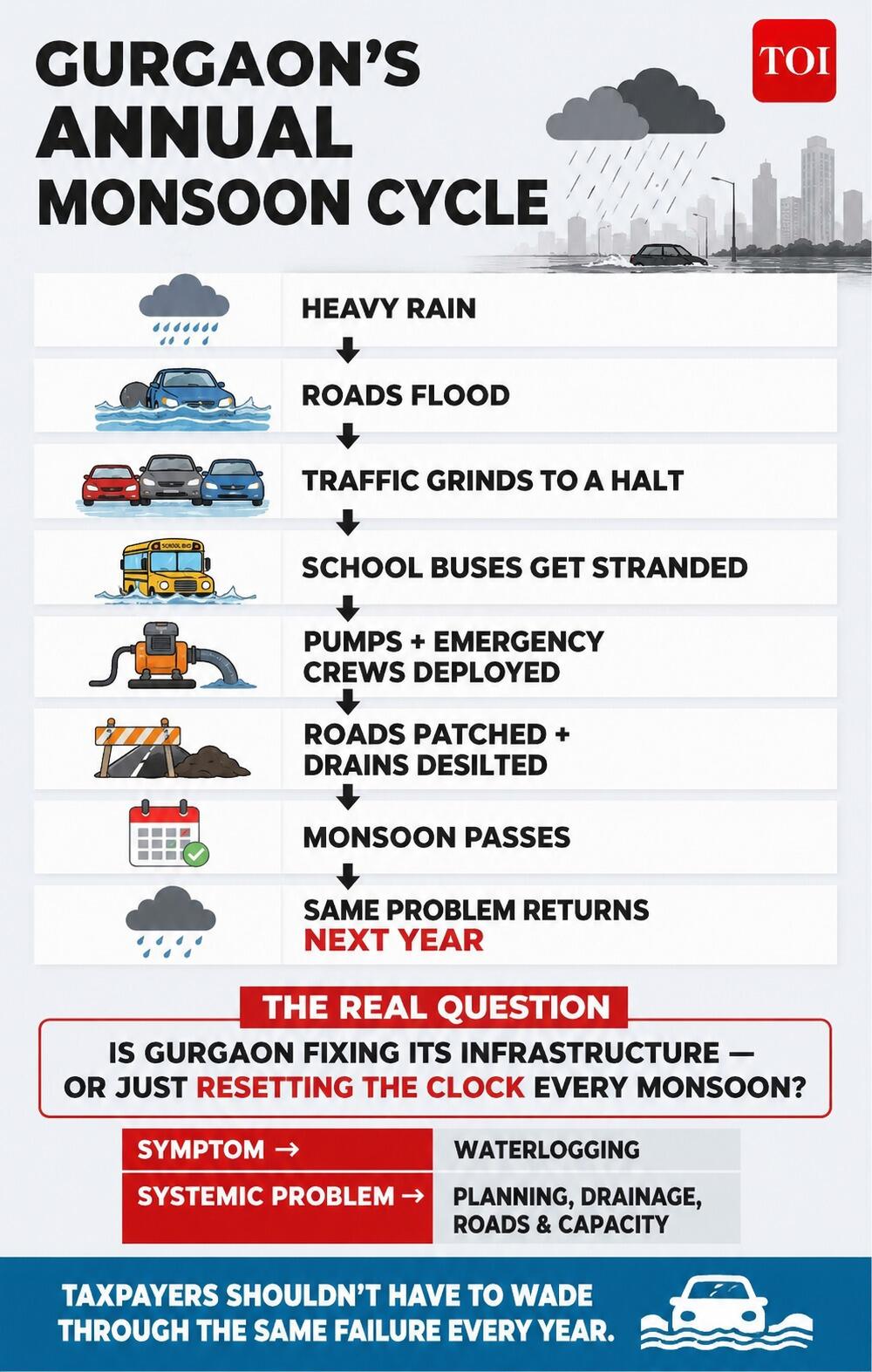
Annual monsoon cycle
The administration on Tuesday asked corporate offices, government departments and private educational institutions to work from home or conduct classes online, partly to reduce traffic and enable civic agencies to carry out drainage and road work.The advisory may make sense as an emergency measure, but it also points to a deeper contradiction: a city touted as a corporate and economic powerhouse is essentially asking its workforce to stay indoors because its roads cannot reliably handle a heavy monsoon spell.Even rainfall patterns are changing. Vishwas Chitale, a fellow at the Council on Energy, Environment and Water (CEEW), said their analysis found that 64% of India’s tehsils have seen more frequent days of heavy rainfall in the last decade than in the 1982–2011 baseline.So Gurgaon can’t plan based on yesterday’s rainfall patterns. The real test for taxpayers is whether every rupee spent on drains, roads and flood mitigation makes the city less vulnerable next year — or whether residents will once again be wading waist-deep in water, wondering where all their infrastructure money went.