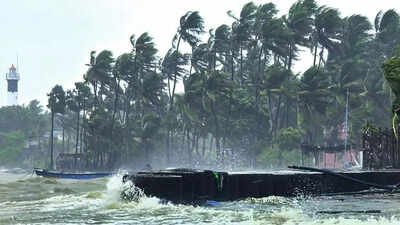
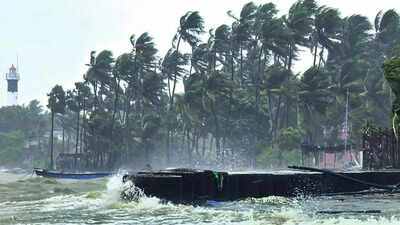
NEW DELHI: Cyclone ‘Arnab’ has battered India’s eastern coast, uprooting trees and electric poles, damaging roads and bringing torrential rain, with some areas of Andhra Pradesh and Odisha recording up to 30 cm of rainfall. The storm’s impact is now expected to extend to Nepal, which is bracing for several days of rain, thunderstorms and snowfall from Thursday.The Nepal Meteorological Department’s Weather Forecasting Division said the country was currently experiencing the partial influence of westerly winds, with the approaching cyclone expected to bring widespread precipitation and a risk of heavy rain and snowfall through the weekend.“The country is currently under the partial influence of westerly winds. In addition, the country is expected to come under the influence of Cyclone ‘Arnab’, developed over the Bay of Bengal, from Kartik 12 (Thursday),” the department said in its latest bulletin.Weather conditions remained relatively clear in the Himalayan and hilly regions on Wednesday morning, although fog and mist affected parts of the Terai, valleys and river basins.The department forecast increasing cloud cover and scattered precipitation from Wednesday afternoon, with conditions becoming more unsettled overnight. Koshi, Madhesh, Bagmati, Gandaki and Lumbini provinces are among the areas expected to experience rain, while snowfall is possible in Himalayan regions.The risk is forecast to increase on Thursday night, when thunderstorms and lightning could accompany rain and snowfall. Heavy precipitation is possible in parts of Koshi, Bagmati and Gandaki provinces, while some areas of Lumbini could also receive heavy rainfall.Friday and Saturday are expected to bring the most widespread impacts. The department warned that heavy rain or snowfall could affect several provinces, with isolated locations facing the possibility of very heavy precipitation.Its Friday forecast states, “Mostly cloudy throughout the country. Light to moderate rain or snowfall accompanied by thunder and lightning is possible at most places in Koshi, Madhesh, Bagmati, Gandaki and Lumbini Provinces and at many places in Karnali and Sudurpashchim Provinces.”The expected combination of westerly winds and moisture associated with Cyclone Arnab could increase the risk of flooding in low-lying areas and landslides in vulnerable hilly regions. Heavy snowfall could also create hazardous conditions in high-altitude areas.
Share your thoughts in the comments
Be respectful · TOI community guidelines
Meanwhile, in India, at least three people died in cyclone Arnab-related incidents in Andhra Pradesh on Wednesday. South Coast Railway (SCoR) cancelled 57 trains and rescheduled 15 others as a precautionary measure. However, officials quoted by ANI said the cyclone had weakened from a very severe to a severe cyclonic storm after moving over land, and was expected to weaken further. Four additional NDRF teams were deployed to Andhra Pradesh.