Explore the Vibrant Culture of New Delhi: A Comprehensive Guide
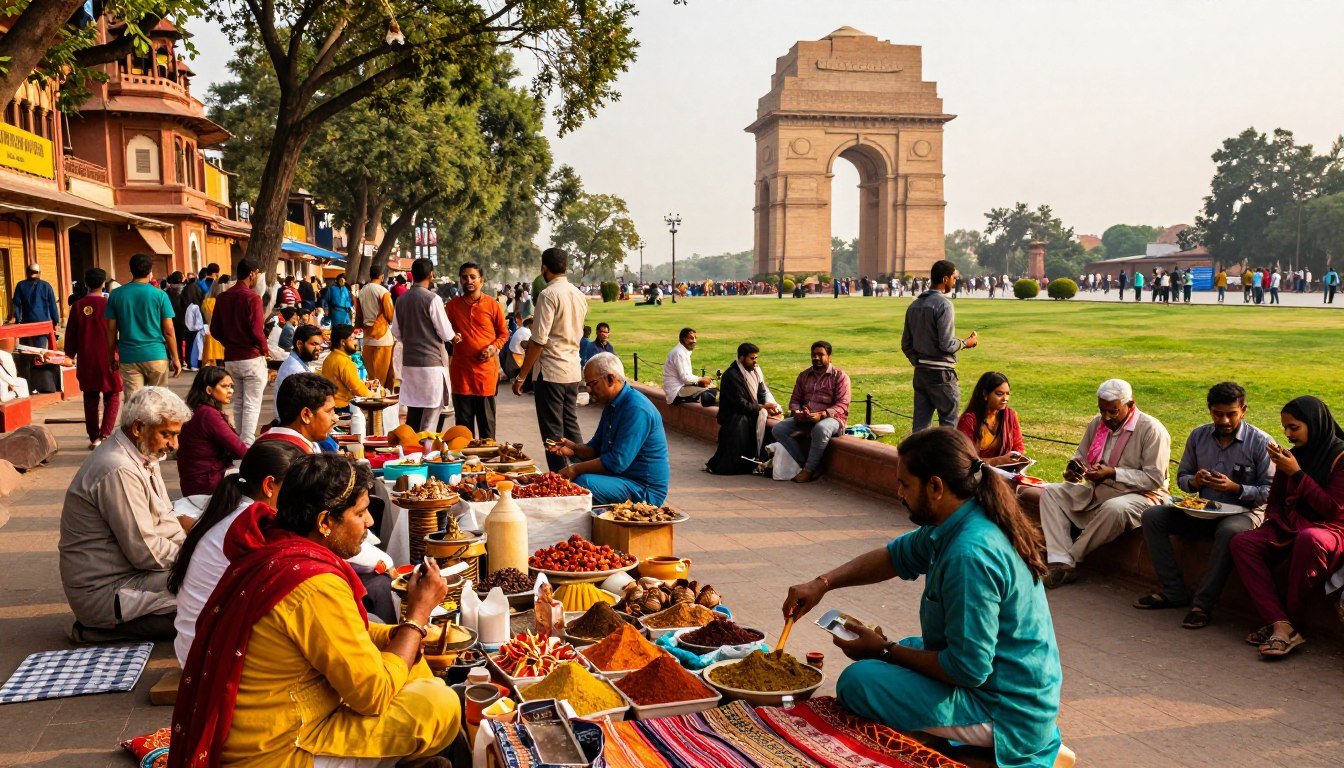
Welcome to a friendly, practical guide that helps first-time US travelers see and feel the best of New Delhi in just a few packed days. This capital city blends ceremonial grandeur with lively markets, spiritual music, and everyday life.
Expect clear, actionable tips. We’ll explain why people often say “Delhi” when they mean this area, and how that shortcut can affect your choice of neighborhoods, transit, and must-see sights.
Inside, find history you can walk into, landmark must-dos like Rashtrapati Bhavan and Sansad Bhavan, museums, gardens, food tips, and smart planning for heat and haze. The guide is informational, not salesy, and aims to build confidence for independent planning.
Practical promises: pacing advice, hydration cues, safety basics, smart street-food approaches, and when the Metro will save you time. Read on to plan an itinerary that feels doable and memorable in this energetic part of the country and the wider world.
Key Takeaways
- New Delhi mixes formal state sites and daily market life.
- Know neighborhood names to avoid planning confusion.
- Focus on landmarks, food, museums, and cooling strategies.
- Simple safety and hydration tips make travel smoother.
- The Metro is often the fastest way to move around the city.
New Delhi at a Glance: India’s Capital City Today
A compact administrative core anchors a much larger urban sprawl. That contrast matters when you book a hotel or time a commute.
Where it sits and what the names mean
The city proper is a municipality run by the New Delhi Municipal Council inside the capital territory. Around it sits the wider metropolitan area and the National Capital Region (NCR).
What travelers should know
- Scale: city population ~250,000 (2011); metro roughly 28.5 million (2018).
- Time zone: Indian Standard Time (IST).
- Function: this part of the capital hosts key government offices, ceremonial routes, and heavy security zones.
Practical tip: locals often say “Delhi” for the whole area, but use landmarks and neighborhood names when arranging pickup points or choosing a stay.
For a concise orientation, see a short New Delhi overview. It helps set realistic travel times and expectations.
Where Is New Delhi? Geography, Rivers, and Urban Areas
New Delhi sits at 28.6139°N, 77.2089°E. The city occupies a small municipal area of about 42.7 km² on the wide Indo-Gangetic Plain. Visually, that plain means flat land, long horizons, and room for a sprawling metro to grow outward.
Coordinates and the plain
The plain gives you easy sightlines and broad streets in some parts. That same flatness also lets the urban fabric spread fast, creating contiguous built zones that feel much larger than the municipal site.
The Yamuna and floodplain edges
The yamuna river shapes the city’s east side and its floodplain. Areas close to the river often feel greener and more open. Floodplain parks and tree-lined embankments offer cooler pockets in summer.
How the city fits the metro
“Urban areas” here means distinct neighborhoods and administrative zones that have merged into one continuous city. Travel times can be long even for short distances because of density, varied road quality, and congestion.
- Plan by geography: Old city cluster, Central/Lutyens cluster, South garden-and-museum cluster.
- Tip: the city’s place in northern india adds dust and seasonal haze to visibility—pack layers and plan indoor stops for hazy days.
From Old Delhi to a New Capital: A Brief History You Can See
From market lanes to formal government boulevards, the built city maps centuries of rule. You can spot Mughal planning in narrow streets and grand mosques. These living areas still host trade, prayer, and daily rituals that trace a rich history.
Old city legacy
Old Delhi was a political center under the Mughal empire (1649–1857). Forts, bazaars, and major shrines remain active and shape visitor routes.
Why the British moved the capital
The capital british decision aimed for administrative centrality and symbolic control. The foundation stone was laid on 12 December 1911; the new capital was inaugurated on 13 February 1931. These years left a clear imprint in avenues, government buildings, and the Raj-era plan.
Independence to modern governance
After 1947 independence, the city’s role shifted from imperial seat to national capital. The area became part of the capital territory framework (formal name in 1991; governance implemented in 1993). Today, monuments cluster where power needed visibility.
| Then (Mughal & British) | Now (Visitors see) | Why it matters |
|---|---|---|
| Dense markets, imperial mosques | Active bazaars, heritage walks | Authentic street life and short walking tours |
| Raj planning, ceremonial axes | Wide avenues, state buildings | Easy museum and monument circuits |
| Colonial years of centralized rule | Modern capital administration | Security zones and formal tourist routes |
Lutyens’ Delhi and British-Era City Planning
Lutyens’ plan shaped a distinct, ceremonial heart where wide avenues meet formal gardens. This planned capital area contrasts sharply with the narrow lanes of the old city. The design reads as intent: clear sightlines, monumental buildings, and public parks that stage the state.
Edwin Lutyens and Herbert Baker’s vision
Architects Edwin Lutyens and Herbert Baker created a program of scale and form. Their architecture aimed to express imperial power through proportion and classical detail.
Today, those choices make excellent photo spots and easy walking routes for visitors who want architectural clarity without the crush of markets.
Rajpath’s ceremonial axis
The ceremonial axis runs from india gate toward Rashtrapati Bhavan. Open lawns and long avenues set this site apart from older urban fabric.
Connaught Place as a planned hub
Built between 1929 and 1933, Connaught Place was designed as the commercial center. It remains central, walkable, and well connected by transit—useful as a base for exploring the government district and nearby museums.
Practical tip: visit early morning or late afternoon for softer light, allow 2–3 hours to walk the axis and nearby sites, and pair Connaught Place with a museum stop for an efficient half-day. For a delhi one glance, this district shows the city’s modern identity in a single visit.
Neighborhood Guide: Old Delhi vs New Delhi
Where you base yourself decides whether your days start with calm gardens or crowded bazaars. That choice shapes mornings, meals, and transit needs.
Old Delhi’s lanes, bazaars, and historic core
Old Delhi means narrow, winding streets packed with stalls and people. Expect sensory overload: loud calls, smells of frying spices, and tight footpaths.
Practical payoff: phenomenal street food, handicrafts, and quick access to heritage sites that reward standing in the crowd.
Broad avenues, embassies, and garden-lined streets
The planned district offers wide, tree-lined avenues, diplomatic compounds, and calmer public gardens. Streets feel familiar to travelers used to quieter capitals.
Advantages: easier walking, calmer nights, and straightforward routes to major museums and state sites.
Choosing where to stay
If you want early-morning monument access or nightlife, pick a central, well-connected district. Budget travelers may prefer guesthouses near busy market hubs.
Prioritize proximity to a Metro station: in heavy traffic, being close to transit often beats short-mile distance by road.
Tip: many travelers sleep in the planned area for comfort and treat the historic core as a focused day trip for markets and iconic sites.
Iconic Landmarks in New Delhi You Shouldn’t Miss
Start your visit with a short list of iconic places that map power, science, and living history. These landmarks form a handy, walkable circuit to help you see the city’s highlights without decision fatigue.
- Core landmarks checklist: India Gate, Rashtrapati Bhavan, Jantar Mantar, Purana Qila, and a quick museum stop near the government district.
- Time: plan a half-day and pair outdoor sites with an indoor pause at the national museum or a nearby gallery.
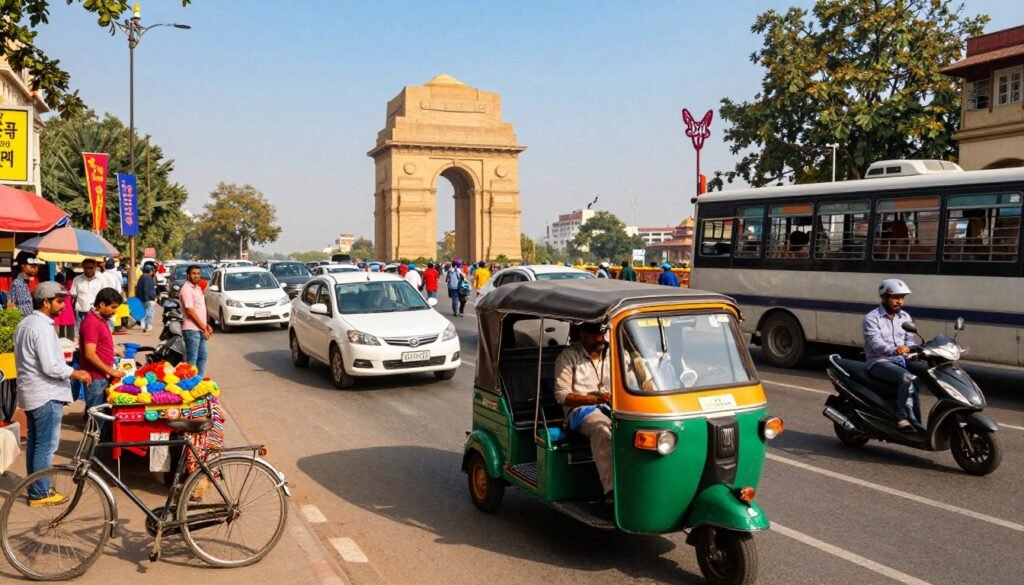
India Gate is more than a photo stop. It is a war memorial set on broad lawns that fill with evening crowds. The memorial landscape reads like the city’s ceremonial living room, ideal for a sunset walk.
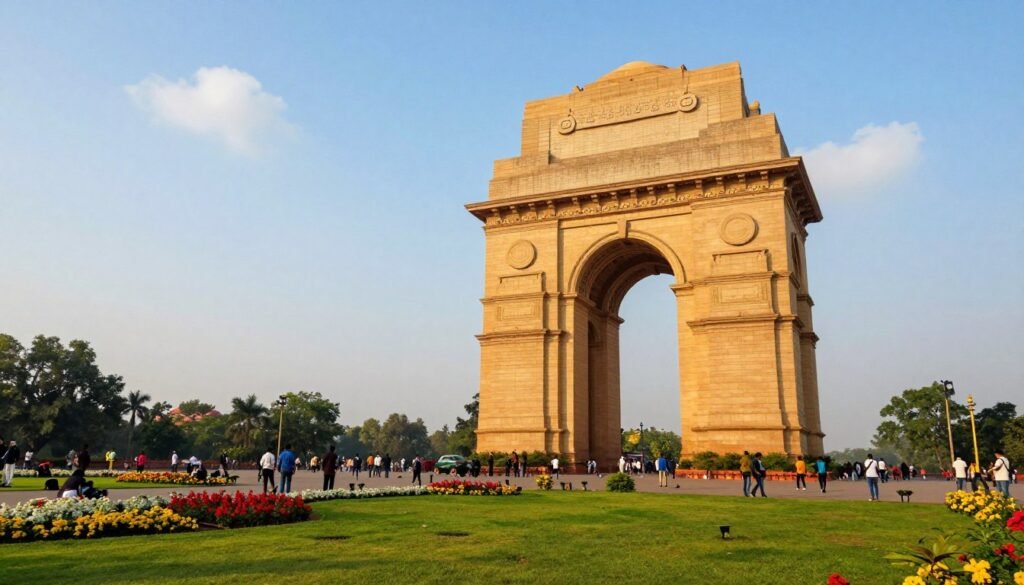
Rashtrapati Bhavan crowns the grand government district. This palace is one of India’s largest official residences. View it from the public lawns, arrive early, and expect security checks; remain respectful around guarded routes.
Jantar Mantar is an open-air observatory built in 1724. The geometric instruments are intriguing even if you skip the math. Walk among giant sundials and tilted stone devices to feel the city’s scientific side.
Purana Qila lets you see layers of history in one site. The fort’s walls and gates show Mughal and earlier phases. It’s a calm place to connect eras and imagine the city’s long story.
Suggested half-day route: start at India Gate at dawn, walk or drive past Rashtrapati Bhavan, drop in at Jantar Mantar, then finish at Purana Qila. This order cuts backtracking and fits varied interests.
Old Delhi Essentials: Red Fort, Chandni Chowk, and Jama Masjid
The historic quarter rewards an early start: packed lanes, grand walls, and active worship sites fit into a single, memorable loop.
Red Fort is an octagonal fortress built in 1639. Its vast ramparts are carved from deep red sandstone, a scale that still impresses visitors. The site is a recognized World Heritage landmark and a clear window on Mughal power. Arrive at opening to avoid crowds and heat.
Chandni Chowk: foot or rickshaw?
Chandni Chowk is a living market ecosystem. On foot you spot tiny shops, smells, and photo moments. A rickshaw speeds you through lanes but limits close-up views. Choose walking for photos and rickshaw for quick transit or narrow stretches.
Jama Masjid: respect and rhythm
Jama Masjid is among India’s largest mosques and remains a working place of worship. Dress modestly, remove shoes at the entrance, and stay quiet during prayers. Observe from the courtyard if you don’t join services.
- Best combo: fort + market + mosque with short breaks—start at the fort, stroll Chandni Chowk, finish at Jama Masjid.
- Safety note: keep valuables close, use a cross-body bag, and stay aware in crowded lanes without letting caution overshadow curiosity.
Museums and Galleries for History, Art, and Identity
Museums give a calm, air‑conditioned way to catch up on the city’s long tale without rushing between sites. They serve as an ideal “reset day”—slow pacing, fewer crowds, and clearer context for what you saw on the streets.
National Museum highlights for first-time visitors
Focus on a few galleries. The national museum spans millennia and can overwhelm. Pick 3 stops: ancient civilization exhibits, medieval art, and the decorative-arts wing. That gives a coherent, time-lined experience without museum fatigue.
A modern lens: National Gallery of Modern Art
The National Gallery of Modern Art shows how artists interpreted social change across years. Visit to see how visual culture helped shape one india’s evolving identity. Think beyond pretty paintings—look for themes that link art to politics and daily life.
Gandhi collections and independence-era memory
Gandhi-focused collections preserve objects and documents from the independence era. These displays explain ideas that still influence civic life in the capital and help people connect monument visits to modern governance and social values.
- Practical pairing: a museum morning and a garden or market in the afternoon balances cool interiors with fresh-air strolling.
- Tickets & timing: expect security checks; buy timed-entry when possible and allow extra time on weekends or public-holiday peak days.
Gardens, Green Spaces, and Slow Moments in the Capital
Green pockets across the capital offer quiet pauses that reset a busy sightseeing day.
Lodi Gardens: history meets calm
Lodi Gardens is ideal for a slow morning walk. You see tombs and colonial-era landscaping while enjoying shade and low crowds.
Mughal garden traditions behind the palace
The Mughal Gardens are a triple-terraced, formal landscape spanning about 130 hectares (321 acres) behind Rashtrapati Bhavan.
Design notes: symmetry, water channels, and terraces create a cooling pattern that feels removed from busy streets.
Garden of Five Senses: themed landscapes and festivals
This park stages events and offers themed areas for scent, sound, and texture. It’s a cultural stop that doesn’t require a museum-sized commitment.
Seasonal and comfort tips: in summer go early to avoid peak temperatures and plan around likely monsoon rainfall (late June–mid-September). Wear light, breathable clothes, carry water, and watch hourly temperatures to avoid burnout.
| Garden | Best time | Why visit |
|---|---|---|
| Lodi Gardens | Early morning | Heritage structures, quiet walks, easy photos |
| Mughal Gardens | Winter to spring | Formal terraces, water features, royal site |
| Garden of Five Senses | Evening or festival days | Themed landscaping, cultural events, sensory trails |
Culture in Motion: Music, Spiritual Sites, and Daily Life
In this city, music and prayer spill into lanes and parks, turning ordinary evenings into vivid scenes. Culture in motion is not a museum label here; it is a living soundtrack you hear while walking.
Nizamuddin Dargah is famous for its Thursday Qawwali. Arrive early to find a good spot, dress modestly, and follow local cues. The singing can be intense, moving, and communal. Expect crowds of people who come for devotion and the music.
Visiting temples and smaller shrines also asks for simple respect: shoes off, modest clothing, and quiet observation. These rules make space for worshippers and let visitors learn without feeling intrusive.
Local life ties worship, music, and markets together. Many people fit prayer and community music into weekly routines, so a night performance often follows a day in a museum or garden.
- Pairing tip: spend an afternoon at a garden or museum, then attend Qawwali after dusk for a full cultural arc.
- Remember: each district can feel different—expect multiple versions of the same city as you move around.
“The best way to know a place is to sit and listen.”
For an example of a more challenging cultural moment and how visits can surprise you, read this uncomfortable cultural encounter—it shows why patience and respect help visitors enjoy these living sites and learn about one india‘s long social rhythms of the past years.
Food and Markets: What to Eat in Old Delhi and Beyond
A food crawl in the old market lanes is one of the clearest ways to taste this city’s history. Start small, move slowly, and let favorite stalls guide you.
Old market food crawl basics
Game plan: pick three must-try bites—one savory, one sweet, one snack—and space them with tea or a cooling break. Chandni Chowk works well as a base for this loop.
Avoid trying everything at once. That keeps your energy up and reduces stomach risk.
Spice markets and trading culture
The spice lanes here reflect a long trading tradition. Browse like a visitor, not a buyer: smell, ask, and photograph. The area is often cited as the india largest spice market, which makes it a cultural site as much as a shopping stop.
Street-food tips for US travelers
- Choose busy stalls; turnover often means fresher food.
- Pick freshly cooked items and use bottled water.
- Start mild and increase spice gradually.
- Stand to eat where locals do, pay cash, and keep small bills ready.
Beyond old delhi, New Delhi also offers cafés and modern restaurants that are handy recovery meals between market days. Enjoy the variety—this city feeds curiosity as well as appetite.
Getting Around: Transportation in New Delhi
Smart use of public transit, trains, and rides gives you more hours for museums, markets, and gardens. Match each leg of your day to the quickest option and you will see more without stress.
Indira Gandhi International Airport connections
Indira Gandhi International Airport serves New Delhi and links well to central districts. The Airport Express is fast, reliable, and avoids road delays.
Practical tip: for first-time US travelers, clear immigration and baggage can take time. If you want speed to the city, the express train or a pre-booked rideshare are the easiest choices.
When the Metro is the best option
The Delhi Metro runs multiple lines, including the Airport Express. It often beats road travel during peak traffic hours and for long cross-city trips.
Use the Metro for predictable travel times, short transfers between museum areas, and avoiding congestion on main avenues.
Trains and New Delhi Railway Station
New Delhi Railway Station opened in the 1920s and remains a major hub for regional trains and day trips. Trains are ideal for quick escapes outside the metropolitan area.
Allow extra time for station security, crowds, and luggage handling when you plan day trips by rail.
Rickshaws and rideshares: what to expect
Rickshaws are best for short hops in the historic core; they fit narrow lanes but are slow in heavy traffic. Negotiate fares or confirm meters first.
Rideshares give door-to-door convenience and are handy late at night or with luggage. Expect variable wait times when traffic is heavy.
- Visitor stack: Metro for speed, rideshares for comfort, rickshaws for short Old Delhi hops.
- Don’t lose a day: pick one zone per day and plan transport strategically instead of zig-zagging across the city.
Climate, Seasons, and the Best Time to Visit
Seasonal shifts in the capital shape every travel plan — from blistering afternoons to misty mornings.
Hot summers and what they feel like
Hot summers arrive early and build fast. Daytime temperatures often sit well above 34°C (93°F) and can spike past 45°C (113°F) on extreme days.
Plan outdoor sightseeing for early morning and late evening. Midday walks feel brutal and sap energy quickly.
Monsoon rainfall and travel effects
The rainy season runs from late June to mid‑September. Heavy rainfall can flood streets, slow transit, and soak shoes.
Keep indoor backups like museums and temples on wet days, and expect slower connections when trains or roads are waterlogged.
Winter fog and early-morning visibility
Winter brings cool mornings and dense fog that reduces visibility. Flights and early trains may face delays, so build buffer time into tight schedules.
Packing guide by season
- Summer: breathable cotton, hat, strong sunscreen.
- Monsoon: waterproof shoes, light rain jacket, quick-dry clothes.
- Winter: a light layer for cool evenings and foggy mornings.
Air comfort note: stay hydrated, use sunscreen, and rest often. If you want warmer options elsewhere, see this list to escape the winter chill.
Realities of a Mega-City: Traffic, Air Pollution, and Practical Tips
Traffic, dust, and heat shape daily plans here more than distance does. Accepting that helps you plan realistic days without stress.
Navigating congestion means starting early, grouping sights by neighborhood, and using the Metro when it saves time. Allow buffer time between stops so a jam doesn’t ruin a schedule.
Navigating busy roads without losing your day
Pick one area per day. Walk short stretches, call a rideshare for long transfers, and check live transit apps before leaving your hotel.
Air quality and planning outdoor sightseeing
Check the AQI each morning and shift outdoor visits to cleaner days. When pollution spikes, balance the day with museums and indoor breaks.
For resources on cleaner-air options nearby, see cities with better AQI and plan a swap if needed: cities with better AQI.
Staying comfortable during extreme heat and dust storms
In hot summers expect strong winds (the “loo”) and sudden dust. Carry water, electrolyte sachets, sunglasses, and a light face covering for dusty stretches.
- Quick tips: shade breaks, lighter midday meals, and avoiding long open-road walks during peak heat.
- If conditions worsen, call a rideshare instead of pushing on by foot.
“Plan around conditions, don’t overpack each day, and give yourself recovery time.”
People and Modern New Delhi: Languages, Growth, and Change
Walking here, you’ll notice construction cranes and new markets next to heritage gates—signs of a city in fast motion.
Migration has remade the city. Tens of millions live across the metropolitan area today, and many arrived in recent years seeking work, study, or family. That rapid growth gives streets a layered, global feel.
The mix shows in neighborhoods: eateries serving regional dishes sit beside corporate towers and newly built malls. Look for construction, changing skylines, and fresh commercial zones as evidence of growth.
A quick language snapshot for visitors
Hindi is the most common language you’ll hear. English is widely used in tourism, hotels, and many shops. You will also hear Urdu and Punjabi in markets and cultural spots.
- Communication tips: show addresses in writing, save your hotel card, and use map pins to avoid confusion.
- Use landmark names when asking directions; locals respond quickly to well-known sites.
Respectful travel note: dress and worship practices vary block to block. Notice different clothing styles and rituals, and follow local cues when visiting shrines or homes.
“The most meaningful moments often come from everyday interactions—shops, cafés, and guided walks.”
For a lighter cultural read that ties modern trends to everyday life, see this piece on shifting names and tastes: baby-name trends shaping culture.
Suggested Itineraries for First-Timers
Start your visit with a simple plan that balances big landmarks, slow afternoons, and easy transport choices. These sample routes cluster sites so you spend time exploring, not stuck in traffic. Pace each day for comfort, with realistic start times and built-in meal breaks.
One day: Old Delhi classics and a sunset at India Gate
Begin at Red Fort at opening to avoid heat and crowds. Walk through Chandni Chowk, taste a light snack, then visit Jama Masjid.
Use a short rideshare from the old core to the ceremonial zone. End the day with an easy sunset at india gate for photos and a relaxed evening lawn stroll.
Two days: museums, Connaught Place, and gardens
Day one: museum morning at the national museum to escape midday heat, then Connaught Place for an afternoon coffee and shopping.
Day two: slow morning in Lodi Gardens or the Mughal Gardens, add a nearby gallery, and use the Metro for predictable transport between sites.
Three days: spiritual music, markets, and architectural deep-dives
Add an evening at Nizamuddin Dargah for Qawwali. Reserve a morning for a spice-market walk and an architecture-focused route through Lutyens‑style buildings.
Use Metro for longer hops and rideshares for door-to-door comfort. If air quality or weather worsens, swap outdoor gardens for an extra museum session.
- Pacing tip: aim for an 8–9 AM start on heavy days and schedule a midday rest.
- Transport note: Metro for long cross-city legs; rideshare for tight transfers or late returns.
- Choose-your-own: if time is tight, drop day three—this keeps core monuments and a museum visit without feeling you missed everything.
Conclusion
See the capital by using major sites as anchors, then filling time with gardens, markets, and music that suit your pace. Start days in one district—Old Delhi, Lutyens/Central, or South—so transit stays simple and your energy lasts.
Plan around anchors: pair a landmark morning with a museum or a food crawl, and save an evening for a music or temple visit. This mix shows both formal government life and the city’s daily rhythms.
Manage traffic and air quality with smart timing and indoor backups. For context on the city as a national seat of government, see this note on its role as a seat of government, and for a local perspective on the capital of India visit this housing guide.
Use the sample itineraries as templates. Personalize by pace and comfort, then plan a return to explore deeper areas later. With curiosity, patience, and a little planning, New Delhi rewards first-time US visitors.