
Chandra Grahan 2026: What causes a Lunar Eclipse? The Science behind it |
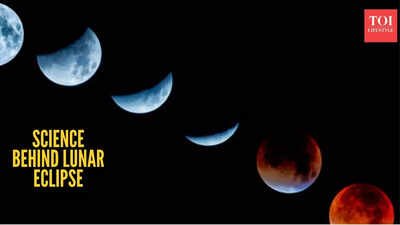
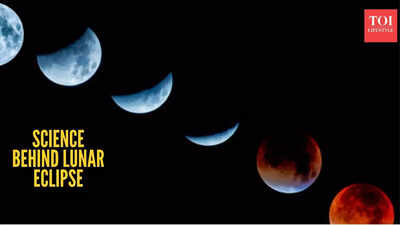
Every now and then the Moon catches us off guard. You go out, and you think it will have the old white light on and what you see is that the Moon is darker and coppery, even red. The social media is filled with pictures, friends send messages to check up and the next minute everybody is a little interested in astronomy.That cinematic is termed as lunar eclipse and even though the spectacle appears dramatic, the science involved is absolutely marvelous in that it is wonderfully simple.
Let’s break it down.It is better to start with the fundamentals of what a lunar eclipse is.A lunar eclipse occurs when the Earth passes exactly in between the Moon and the Sun and prevents the light of the Sun to reach the Moon.Ordinarily, the rays of sunlight are able to travel freely throughout the Sun and reflect on the surface of the Moon and arrive to our eyes. That light is reflected which is why we see the Moon shining in the dark.However, on a lunar eclipse, the earth intervenes.The earth throws a huge shadow into space and as the Moon travels through the shadow of the earth the bright Moon we know starts to fade away, grow darker, and even changes to red.In short:Sun-Earth-Moon taken in a straight line will result in a lunar eclipse.Simple geometry. Stunning results.
Why not once every month?
Many people would ask here, how come that every month the moon revolves around the earth, and yet we should always see lunar eclipses?The solution is in orbital alignment.The orbit of the Moon around the earth is somewhat tilted- approximately five degrees against the orbit of the earth around the Sun. The Moon nearly crosses the shadow of the earth every month either above or below it.Only when three conditions match exactly, a lunar eclipse takes place:It must be a full Moon.The Sun, the Earth and Moon have to fit in an almost perfect way.The moon has to traverse the shadow plane of the earth.That exact coincidence doesn’t occur very frequently and this is why the situations when lunar eclipses take place are special.Learning about the shadow of the Earth: Umbra and Penumbra.The shadow on the earth is not only one dark spot. It has two parts:1. Penumbra – the external shadow that is light.2. Umbra – the shadow in the middle.The types of lunar eclipse depend on these zones.Penumbral Lunar EclipseThere is the slight outer shadow of Earth. The transition is not loud, most people hardly realize it until they are aware that they are supposed to take a specific time.
Partial Lunar Eclipse
The Moon only partially gets into the dark umbra. It appears as though a slice has been made out of the Moon.
Total Lunar Eclipse
This is the dramatic one. All the Moon slips into the umbra of the earth, and rather than being totally absorbed, perforce becomes reddish.And then to the most interesting question.
Why does the Moon turn red?
The term Blood Moon is very likely to have been mentioned to you. The fact that it is a mystery is just the explanation of pure physics.Though the Moon is not directly hit by sunlight as reflected by the Earth, there is some sunlight reaching the Moon indirectly.When the sunlight penetrates through the atmosphere of the earth, the shorter blue rays are scattered in every direction, the same reason why our sky is blue in the daytime and the oranges and reddish rays of the sunset.The rest of the red and orange light curves around the earth and reaches the moon.Then when there is a complete lunar eclipse, the Moon is lighted by all the sunrises and sunsets that occur on earth simultaneously.It is that filtered sunlight which makes the Moon coppery.It is not spooky like it sounds- or nearly poetic at all.
Is it safe to watch?
Yes – completely.The eclipse of the moon is completely safe and can be viewed with the naked eye unlike a solar eclipse that requires the use of eye protection. You may long as you please stare at it.No special glasses. No filters.Just step outside and look up.The experience is not dependent on the use of binoculars or small telescope, which will help in the detection of subtle colour variations and surface details.
What duration does a lunar eclipse take?
Timing is one of the reasons why lunar eclipses are more relaxing than solar ones.The duration of a total lunar eclipse may take a number of hours to complete. The entire phase in itself, appearing red, might take about an hour, or longer.This gradual movement occurs due to the fact that the shadow of the earth is huge in relation to the Moon and therefore the Moon has a slow pace in traversing its shadow.You do not need to hurry to go out at a certain time. The show unfolds gradually.The significance of lunar eclipses to the ancient cultures.Astronomy described eclipses long before eclipses were explained, and they caused awe – and fear.Early civilisation tended to detect the lunar eclipse as omenous or as a sign of doom. In India, the eclipses were related to mythical activities of Rahu and Ketu. They were interpreted as omens by other cultures or oracles in fate.Science has taken the place of superstition today, however, the feeling response has not altered much. To this day, it is oddly compelling to watch the Moon go black.It makes us remember that we are as tied to heavenly motions that have gone on millions of kilometres distant.A reminder of heavenly synchronism.What it symbolizes may be the most beautiful aspect of a lunar eclipse, namely, alignment.Three heavenly bodies: the Sun, the Earth and the Moon, always on the move, momentarily come to the ideal harmony.It is not some supernatural action. No rare cosmic accident. Simply as physics dictates, predictable orbital mechanics doing their job.But it is magic even when the dark sky and the red Moon are shining.Since wonder is not always removed by science, it is enhanced.When the next lunar eclipse strikes you do not need any complex set-up or technical skills.All you have to do is to step out there, take a look up, and get a reminder: you are viewing a shadow of the Earth traversing the Moon in real time.A silent beautiful reminder that even mundane planetary action could make extraordinary events in the sky.