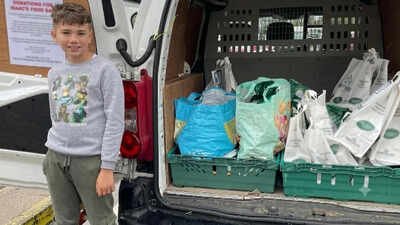
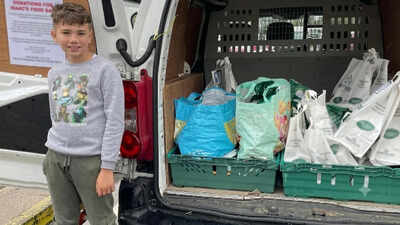
At nine years old, Isaac Winfield saw people in his hometown of Redditch struggling to put food on the table and decided to do something about it. In November 2020, he used his own pocket money to buy £40 of groceries and set up a small pop-up food bank on his family’s driveway. Six years later, Friends of Isaac’s Food Bank has grown into a six-site operation supporting about 5,000 people each year, according to Sounddelivery Media and the charity’s own website.Isaac did not begin with funding, staff or a formal plan. He was inspired by footballer Marcus Rashford’s campaign against child food poverty and believed that nobody should go hungry simply because they were having a difficult time. What began as one boy’s instinct to share food has become a community-run service that now reaches hundreds of families every week. Read more about it here:
It started on a driveway
The first version of Isaac’s food bank was remarkably simple. He set up a pop-up greenhouse on his family’s driveway in Redditch, stocked it with groceries bought with his own money, and invited people to take what they needed. There were no referral forms, no vouchers and no questions asked. That approach remains central to Friends of Isaac’s Food Bank today, which tells people to take food if they need it and share it if they have a spare.The idea caught on because it removed the barriers that often make seeking help difficult. People could visit a shed, collect essentials and leave without an appointment, paperwork or a formal assessment of their circumstances.
From one shed to six sites
Friends of Isaac’s Food Bank is now a registered community interest company. It has two vans, a warehouse and six sites across Redditch, supporting around 5,000 people annually. The organisation’s website lists five shed locations, including Isaac’s Place on Throckmorton Road, Samuel’s Place in Batchley, Russell’s Retreat at Abbeydale Social Club, Frank’s Shed on the Moons Moat North Industrial Estate and Willow Tree in Church Hill. Together, they serve around 300 families every week.The sheds are open every day of the year, including weekends and holidays. The organisation says that it runs on the generosity of 10 to 15 volunteers, along with donations of food, toiletries, baby items and money.
What people can take and give
The food bank accepts far more than tins and packets. Its donation list includes jars, breakfast items, toiletries, cleaning products, pet food, period products and baby items, reflecting the practical needs of families living through financial pressure. People can donate goods directly at any shed, or contribute money through the organisation’s GoFundMe page or Amazon wishlist. Supporters include supermarkets, local businesses, Redditch College, the YMCA and other community organisations.The model is intentionally low-friction. Rather than requiring people to prove hardship, Friends of Isaac’s Food Bank treats access to basic essentials as something that should be available without stigma.
The impact beyond food
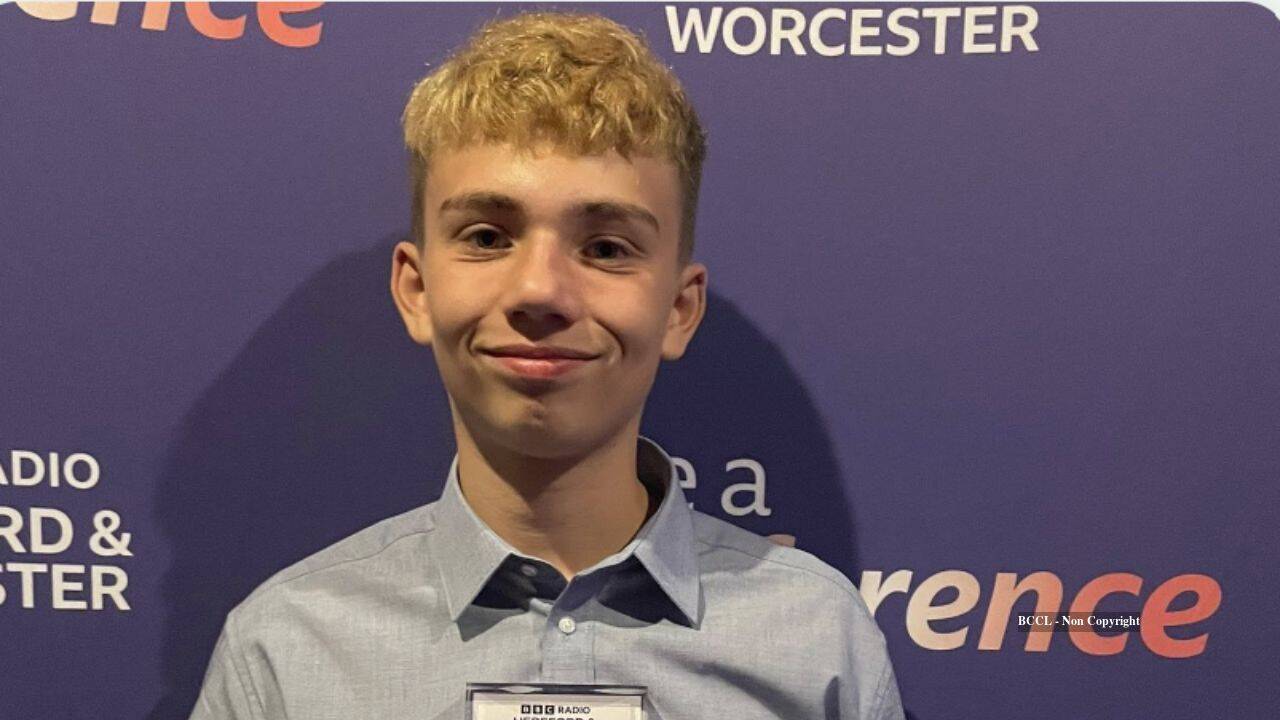
Isaac WinfieldPhoto credit: teamisaac.org.uk
Isaac’s mother, Claire Simmons, who helps run the organisation, said the most meaningful moments have often been small rather than public. She recalled a stranger recognising Isaac in a supermarket and giving him a tearful hug because of what he had done for others.She also described people who once came to the food bank for support later returning to donate food or volunteer their time. One child was so inspired by Isaac that they spent their birthday money buying food for other families.Those stories show how a simple act can change the way a community sees itself. A child donating a tin at school, a business opening its doors or a volunteer giving a few hours each week all become part of a wider network of support.
Challenging assumptions about ability
Isaac’s story has also challenged assumptions about what young people, and particularly disabled children, can achieve. Claire Simmons wrote that society can be quick to decide what someone can or cannot do based on their age, circumstances or disability.Isaac has spent six years quietly disproving that idea, not by talking about what he might accomplish in the future, but by building something practical and lasting. His work has given other disabled children a visible example of what is possible.His mother said the impact has reached beyond food, giving other children confidence and encouraging adults to reconsider their assumptions. In that sense, the food bank has become both a service and a message about inclusion.
A different kind of leadership
Isaac did not have a title, platform or team when he began. What he had, according to his mother, was belief, determination and the courage to act.He also did not change Redditch alone. He gave other people a reason to act with him, whether by donating food, volunteering, opening a business or simply spreading the word. The growth from a £40 driveway stall to six sites serving thousands of people each year reflects that collective effort.Friends of Isaac’s Food Bank continues to operate with the same principle that shaped its beginning: no one should go hungry in Redditch. For a boy who started with pocket money and a greenhouse, the project has become a reminder that community change often begins with someone noticing a problem and refusing to look away.