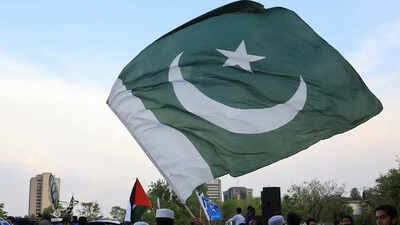
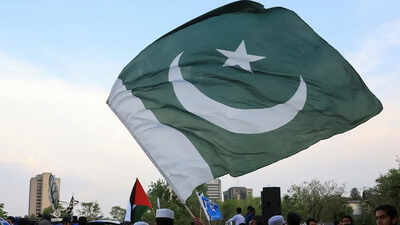
NEW DELHI: Pakistan has ranked 143rd among 145 economies in the World Economic Forum’s (WEF) Global Gender Gap Report 2026, placing it third from the bottom with 59.5% of its gender gap closed. Its score improved by 2.8 percentage points from 2025, marking the country’s strongest year-on-year improvement in a decade, according to the report.The WEF index measures gender parity across four areas — economic participation and opportunity, educational attainment, health and survival, and political empowerment, media outlet Dawn cited.Pakistan’s overall score has risen by 5.2 percentage points since 2006, when it stood at 54.3%. The WEF said the latest improvement was driven largely by gains in educational attainment.
Women remain far behind men in workforce
Economic participation continued to be Pakistan’s weakest area, with the country scoring 36.4% and ranking 144th globally. Labour-force participation stood at 34.6% parity, while women accounted for 6.5% of legislators, senior officials and managers and 44.9% of professional and technical workers.Parity in estimated earned income stood at 26.3%. The report also found that the share of women in senior leadership and business ownership remained limited.
Education drives improvement
Pakistan recorded a significant improvement in educational attainment, reaching a parity score of 91.7%, more than six percentage points higher than in the previous edition.The WEF said parity in education has improved by 21 percentage points since 2006. Gains were recorded across primary, secondary and tertiary enrolment, making education the main driver of Pakistan’s overall improvement in the 2026 index.
Political representation remains low
Pakistan scored 14.1% in political empowerment, ranking 107th globally. While parity in parliamentary and ministerial representation improved from the previous edition, women remained underrepresented in both areas.The report said women accounted for 21.69% of parliamentarians, while men made up 78.31%. Women held just 3.45% of ministerial positions, compared with 96.55% for men.Pakistan also received a score reflecting the period in which a woman has served as head of state, with the report noting that a female head of state had ruled the country for 4.73 of the previous 50 years.
Legal rights show gaps
The report’s contextual indicators also highlighted disparities in women’s legal and economic rights. It found unequal rights relating to inheritance for widows and daughters and restricted rights in access to justice. Women were assessed as having near-equal rights regarding access to financial services and assets, while their rights relating to divorce and reproductive autonomy remained restricted.The report also recorded that 24.9% of women had experienced gender-based violence during their lives.