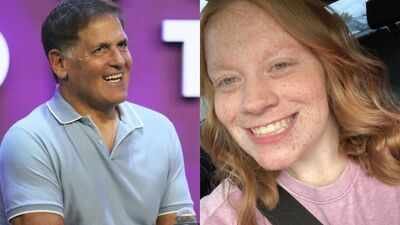
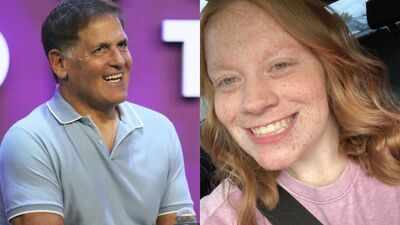
Payton Herres was 11 when she received a donated heart in 2012. Fifteen years later, at 26, she was fighting to access the anti-rejection medicine that helps keep her donor heart working, with her case eventually reaching billionaire Mark Cuban.Herres, now 26, was born with Ebstein’s anomaly, a rare congenital heart condition affecting the tricuspid valve on the right side of the heart. According to The Independednt, the condition can cause blood to leak backwards into the right atrium and can eventually lead to heart failure.After years of health problems, Herres underwent a heart transplant when she was 11. The surgery was successful, but it left her dependent on a combination of medicines to protect the donated heart.That combination became the centre of a dispute with her health insurer. Herres said her insurance company stopped covering everolimus, a medicine she had been taking since 2013 to help prevent organ rejection. She appealed the decision and turned to social media when her efforts did not resolve the problem. Her story eventually reached billionaire entrepreneur Mark Cuban, whose pharmacy began supplying the drug at a much lower cost.
Medicine she had relied on for years
Herres had been taking everolimus along with the immunosuppressant cyclosporine. The combination had worked well for her after doctors tried other medicines that made her seriously unwell.In February, her insurer informed her that everolimus was considered ‘no longer medically necessary’. Herres said the decision shocked her because the medicine had been part of her treatment for years.“It just blew my mind,” Herres recalled after receiving the letter. “I’m like, so you want me to go into rejection and die? Is that what you’re saying? Because it’s not medically necessary?,” she told The Independednt.“For the past 12 years I’ve survived because of one critical combination of medications. This wasn’t some random choice; it was prescribed by Cincinnati Children’s Hospital Medical Center after I had rejection and even ended up hospitalized from serious side effects on other drugs,” Herres added.As the supply of her medicine began to run out, Herres went through the formal appeals process. She said the insurer continued to reject her requests.“Anthem knows this, and still, they block me. I even begged to pay out of pocket, and one of their representatives hung up on me.”
Story spread online
With the appeals process failing to resolve the issue, Herres turned to social media. She asked friends and supporters to share her story and draw attention to her situation.“Make noise. Let them know the world is watching,” she wrote. “No heart transplant patient and no donor family should ever be treated this way,” she added.Her posts were shared thousands of times. Supporters also posted about her case on Anthem’s Facebook page, including comments under the company’s social media posts.In mid-September, Anthem contacted Herres’ doctors and told them that the medication had been approved. Anthem later said that the original denial and appeal decision were based on medical guidelines that did not fully reflect Herres’ treatment history. The company apologised and said it had approved the medication.But approval did not mean the medicine became affordable for Herres.
Price rose from $180 to $1,000
After the medication was approved, Herres said her copay increased sharply. She faced a cost of $350 for a 30-day supply, or about $1,000 for 90 days.Before the increase, she and her parents had paid about $180 for a 90-day supply.“Instead of Anthem covering the medication after my deductible, I now have to pay $350 every month,” Herres said.She found another way to reduce the cost by using GoodRx coupons. Those brought the price down to $88.66 for a 30-day supply, but Herres said she could not depend on the coupons being available at the same price.“The scary part is that these coupons aren’t guaranteed. They can change the price or disappear at any time,” she said. “If that happens, I could never afford those prices, and that terrifies me.”
Mark Cuban comes to rescue
Cuban responded to one of Herres’ posts on LinkedIn. “This is beyond incredible,” Cuban wrote. “Approve and pay for the heart transplant. Deny the generic rejection medicine.”Cuban’s Cost Plus Drug Company then stepped in. The pharmacy now supplies Herres’ medication for about $300 for 90 days, while a nonprofit linked to Bokhari’s startup is covering the costs, Moneywise reported.Herres’ experience is part of a broader debate over health insurance coverage in the US. A study from healthcare consulting firm IQVIA found that 70% of commercially insured patients were initially denied coverage for at least one newly prescribed branded medicine in 2024. Nearly one in four patients were still unable to gain approval for any new prescriptions after a year.In Herres’ case, Elevance Health told MarketWatch that the denial ‘did not fully account for Ms. Herres’ treatment history with everolimus’ and said the drug was considered a specialty medication and cost more.Herres said, “I’ve cried so much this past month I feel broken. Meanwhile, Anthem is a multibillion-dollar company making record profits while leaving me to panic over whether I’ll survive the month. It’s frustrating that Anthem believes it knows better than my heart transplant doctors, who have been managing my care for over a decade.”